

THE CASH REGISTER
“He had a strong sense of nostalgia and a deep regard for objects made to stand the test of time.”

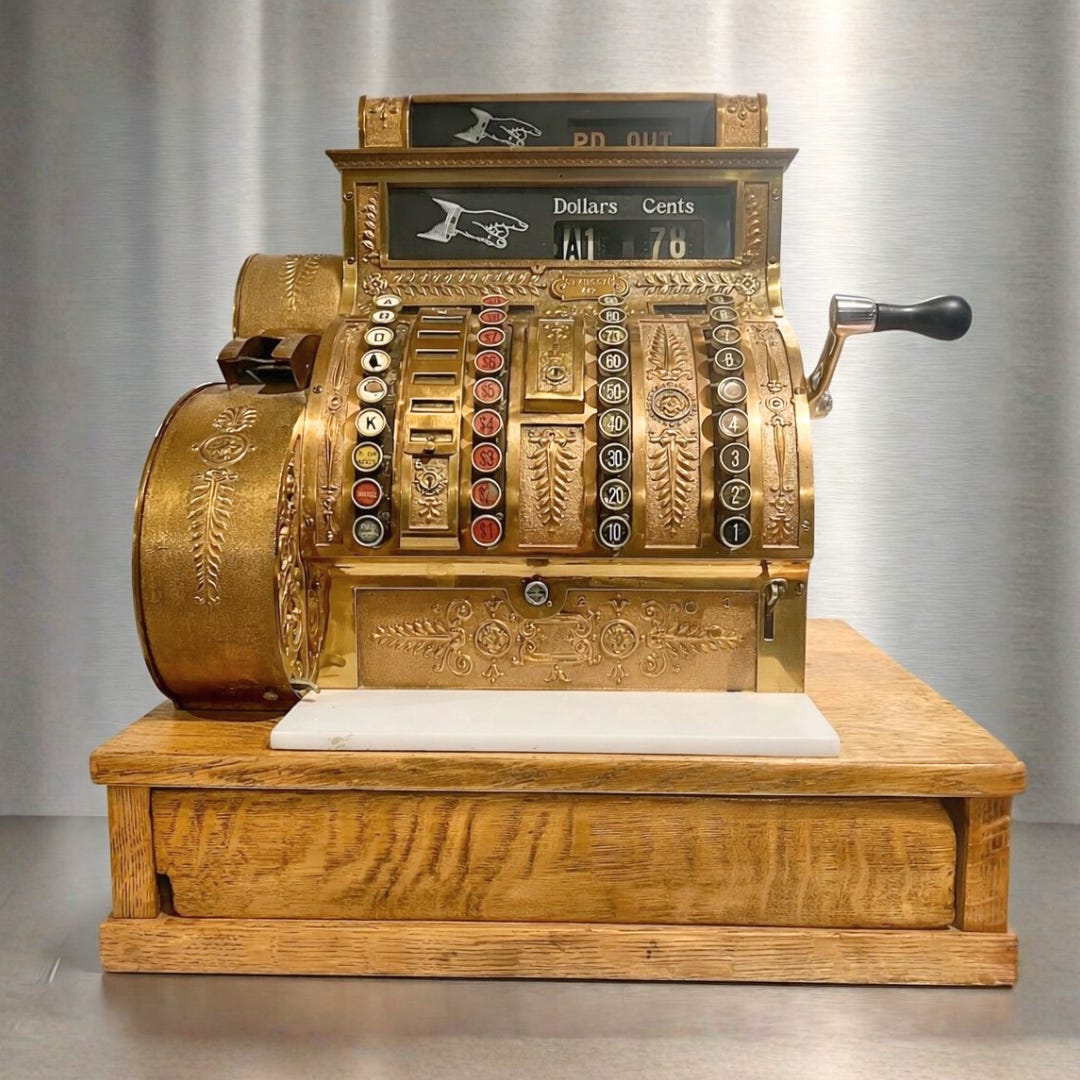
When I was a little girl I used to go to my father’s store in our small town in central Illinois, where he sold office equipment and furniture. I loved spinning in a desk chair until I got dizzy. I loved running around upstairs where no one worked. I would have loved playing with the vintage cash register Dad kept in the checkout area—the circular keys fit perfectly under my fingers and made a wonderful deep clanking sound, and the hand crank dinged as you pulled it—but its drawer sometimes caught, and I was afraid I’d break it. Even so young, I understood that it meant a lot to my dad.
He was an entrepreneur who successfully ran his business for many years, but eventually times changed and demand for copiers and typewriters shrank. My parents kept the details from me, but when I was 12 or so, a classmate asked why there was a story in the paper about my dad and his business, and I began to grasp the extent of his money problems. I began to see he wasn’t infallible—a hard thing for a daddy’s girl. He closed his business for good when my mom left him. We lost our beautiful lakefront home. He moved to an apartment and had to sell most of his things. Not the cash register, though. He never would have sold that.
He’d gotten it from his best friend, Lewie, who had used it in his pharmacy. Lewie was a friend from back when my father was married to his first wife; after they divorced, Lewie chose him over her. During my parents’ marriage, my dad and mom and Lewie were very close, with frequent visits and lots of pinochle. Knowing how much Dad had always loved water skiing, Lewie bought him a used boat so he could teach my brother and me how to ski. Lewie and his friendship meant so much to my dad, but he died young—only 66, about a year before my parents divorced. No wonder the cash register stayed in the picture.
Dad ultimately moved to a different town in Illinois, to a lovely apartment with floor-to-ceiling windows and tons of sunlight. He filled his home with plants and as many vintage and antique items as he could. He had a strong sense of nostalgia and a deep regard for objects made to stand the test of time. His mother had left him and his father when he was a little boy, and I wonder if that early experience of loss made him unusually appreciative of things that lasted and people who stuck around.
He was a glass-half-full person; his favorite phrases were “There you go!” and “Good for you!” I can’t recall a time when he didn’t support a decision I made. When I was nine, he encouraged me to take a job delivering newspapers, which I ended up doing until I was 18. On weekends he helped me deliver them—getting me up at 6 a.m. so I’d be done by the 7 a.m. deadline—and then let me go back to bed until noon because he knew I needed the sleep. He taught me how to knock on doors and have the confidence to ask for the money owed, and to always pay the newspaper company before I paid myself.
Dad was a planner. He liked to be prepared. Starting in his late sixties, he frequently reminded me where he kept his important papers and the key to his lockbox, so I’d know where to look when he died. Not that he was planning to die anytime soon. Over the years he’d rebuilt his life, taking a job as a tent-and-awning salesman and recouping a good amount of the money he’d lost when I was young—because he needed that money to last him into his 90s. His own dad had lived that long, so of course he would too. Nobody expected him to be diagnosed with pancreatic cancer the day before his 78th birthday.
He died in August 2021, less than three months after his diagnosis. I regret not telling him not to do chemo; it destroyed him physically and made him miserable. Toward the end he didn’t talk much. We couldn’t get him to eat much of anything except peaches. Ten months after he died, I brought the cash register home to Denver. It’s on display in my basement now, and my kids are welcome to play with it. I imagine it will last forever, just like all my memories of my super, human dad.
—Jennifer Crick
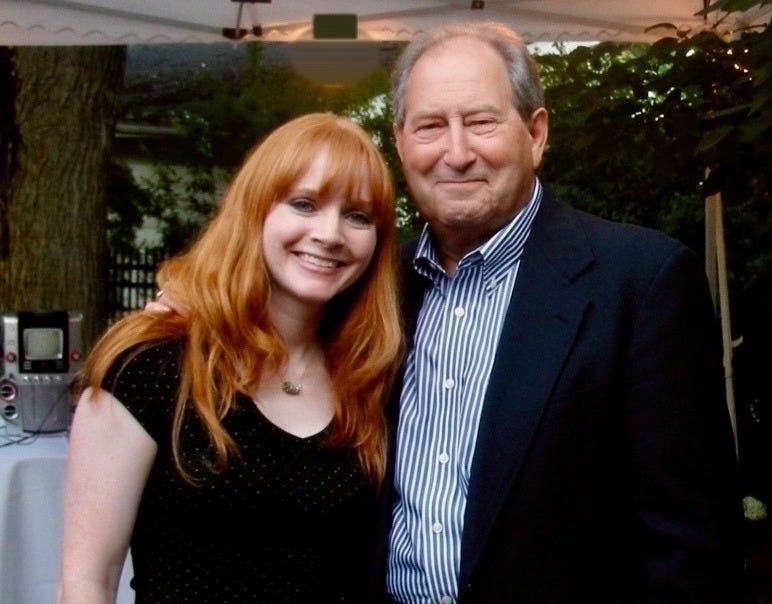
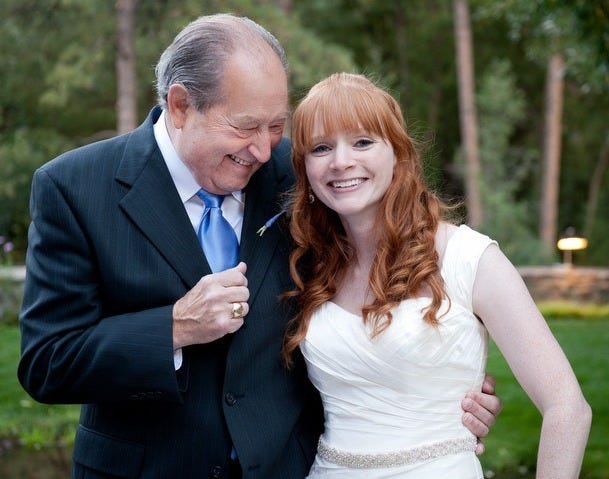
Jennifer Crick lives in Denver with her husband and their two young children. She has an MBA from the University of California Irvine, and in her work as a business consultant she draws on the many skills her father taught her.
For a different reading experience, The Keepthings’ stories can also be read in their entirety on Instagram @TheKeepthings.
Have a story to share? See the complete submission guidelines, including photo guidelines, at TheKeepthings.com.
 | A guest post by
|
What a beautiful tribute to a wonderful father, Jennifer. I wish everyone could have what you two shared. Thanks for the teary-eyed love letter.♥️
This one made me teary. What a beautiful tribute to your dad. You can see exactly who he is in these photos—and how much he adores you. ❤️